
Meet the Expert: Daniel G. Cole, PhD
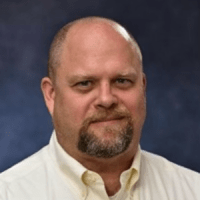
Dr. Daniel Cole is an Associate Professor in the Department of Mechanical Engineering and Materials Science in the Swanson School of Engineering at the University of Pittsburgh and serves as the Director of Pitt’s Cyber Energy Center. He received his BS, MS, and PhD in mechanical engineering from Virginia Tech.
Dr. Cole’s research is centered on high-assurance systems, the security of critical infrastructure, and cybersecurity for industrial control and SCADA systems. His work emphasizes advanced control techniques, system fault-tolerance, and resilience, with applications across a wide range of industrial sectors. He is particularly focused on developing secure and reliable systems for critical energy infrastructure, leveraging high-performance computing and real-time control to enhance operational efficiency and safety. Dr. Cole’s research has received support from major agencies, including the National Science Foundation, the Department of Energy, and the Nuclear Regulatory Commission.
OnlineEngineeringPrograms.com: What’s something you wish the public understood about nuclear engineering?
Dr. Cole: The public often thinks of nuclear power through the lens of Chernobyl and Fukushima, but modern nuclear is extraordinarily safe—it has caused fewer deaths per unit of energy produced than any other major power source, including wind and solar.
Modern reactor designs have passive safety systems where physics itself prevents meltdowns without human intervention, and the “nuclear waste problem” is actually solved from an engineering standpoint. All the waste the US has ever produced would fit on a single football field stacked about 10 yards high. The gap between public perception and reality is vast: a single fuel pellet the size of your fingertip produces as much energy as a ton of coal, yet nuclear remains one of our most underused clean energy sources.
OnlineEngineeringPrograms.com: Do you have any advice for aspiring nuclear engineers?
Dr. Cole: The best nuclear engineers don’t just understand reactor physics. They understand materials science, thermal hydraulics, regulatory frameworks, public policy, and can communicate with non-technical audiences, because the field’s biggest challenges are at the intersection of engineering, economics, and public perception.
Don’t underestimate the importance of communication skills: you’ll need to explain complex technical concepts to regulators, policymakers, and the public in ways that build trust and translate technical reality into accessible language. The future of nuclear energy depends as much on engineers who can bridge these disciplines and communicate effectively as it does on those who can design better reactors.
OnlineEngineeringPrograms.com: What does the future of nuclear engineering look like to you?
Dr. Cole: Small modular reactors will change nuclear economics by enabling factory manufacturing, predictable construction timelines, and the ability to scale incrementally. Meanwhile, advanced reactor designs are finally moving from paper to reality, offering inherently safer operation and fuel cycles that can consume existing waste while producing far less long-lived radioactive material.
Nuclear engineers will work with computational tools that can simulate neutronics and thermal hydraulics with unprecedented accuracy and will design for standardization and modularity rather than bespoke construction. This will require thinking about manufacturability, transportation constraints, and plug-and-play systems. Nuclear provides reliability, and the conversation is shifting from nuclear versus renewables to how nuclear integrates into an optimized clean energy system.
Meet the Expert: Amir Bahadori, PhD
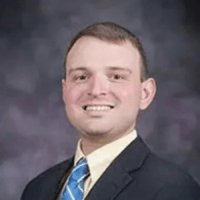
Dr. Amir Bahadori is a professor of nuclear engineering and the nuclear engineering program director at Kansas State University. He is also the director of the Radiological Engineering Analysis Laboratory (REAL) at K-State. He earned his BS degrees in mechanical engineering and mathematics from Kansas State University, his MS in nuclear engineering sciences from the University of Florida, and his PhD in biomedical engineering from the University of Florida.
Dr. Bahadori’s research focuses on characterizing radiation environments, understanding the responses of humans and electronics to radiation exposure, and radiation imaging. He has collaborated with NASA researchers on advanced space radiation detection instruments for the Artemis missions and on the development of novel active shielding methods that can enable long-term missions to the Moon and Mars. He has also worked on several Department of Energy-funded projects.
Dr. Bahadori is a member of the American Nuclear Society, the Radiation Research Society, and the International Radiation Physics Society. He maintains a USNRC senior reactor operator (SRO) license at the Kansas State University TRIGA Mark II Nuclear Reactor.
OnlineEngineeringPrograms.com: What is something you wish the public understood about nuclear engineering?
Dr. Bahadori: Most people associate nuclear engineers with nuclear power plants, but there are many other opportunities out there for graduates of nuclear engineering programs.
Nuclear engineers can specialize in radiation protection and work anywhere radiation is used, such as hospitals; work at National Laboratories on any number of important projects advancing national interests in energy and defense; and even work for NASA, helping to protect astronauts or electronics from space radiation exposure.
OnlineEngineeringPrograms.com: What advice would you give to aspiring students in nuclear engineering?
Dr. Bahadori: Getting coding experience, especially in a versatile language like Python, is a great way to prepare for studies in nuclear engineering. It is also a good idea to take as many math and physics courses as possible!
Nuclear Engineer Job Overview
Nuclear engineers work with nuclear energy and nuclear waste disposal. Some may research and develop new reactor designs, while others may specialize in designing and enforcing regulations that keep the use of nuclear power and nuclear materials safe.
Typical responsibilities for a nuclear engineer can include:
- Designing nuclear equipment and instrumentation
- Testing methods of managing nuclear material for safety and efficiency
- Writing guidelines for the operation of nuclear plants or nuclear equipment
- Monitoring nuclear facility design, construction, and operation for regulatory adherence
More granularly, a nuclear engineer’s job responsibilities will be largely determined by their specialization, sector, and expertise.
Nuclear Engineering Specializations
Compared with many engineering fields, nuclear engineering programs tend to offer fewer formal specializations. While there are many informal areas in which a nuclear engineer can specialize, the following subfields represent some of the most common formal academic specialization options.
Reactor Engineering
Reactor engineering focuses on the design and operation of nuclear reactors. This requires knowledge of reactor physics, thermal-hydraulics, and systems engineering.
- Sample Program: University of California, Berkeley – Nuclear Reactors Design, Management, & Infrastructure concentration (MEng Nuclear Engineering)
Radiation Sciences
Radiation sciences center on the behavior, measurement, and control of radiation. It has applications in medicine, environmental monitoring, and radiation protection.
- Sample Program: University of Wisconsin–Madison – Radiation Sciences concentration (BS Nuclear Engineering)
Plasma & Fusion Engineering
Plasma and fusion engineering concentrate on the science of high-temperature plasma and fusion energy systems. This covers subjects such as plasma confinement, materials science, and fusion reactor operation.
- Sample Program: University of Illinois Urbana-Champaign – Plasma & Fusion concentration (BS Nuclear Engineering)
Nuclear Safety
A specialization in nuclear safety focuses on the assessment and mitigation of risks in nuclear systems, emphasizing safe design, accident analysis, risk assessment, and regulatory compliance.
Common Employers for Nuclear Engineers
Nuclear engineers can work in either the private or public sector. Typical sectors for nuclear engineers include: defense, medicine, research, regulation, power generation, and space exploration. They can work in labs, universities, consultancies, think tanks, power companies, and regulatory agencies.
According to the BLS (2024), there is a relatively even split between the top employers of nuclear engineers:
- Research and development: 21 percent
- Power generation: 20 percent
- Federal government 19 percent
- Engineering services: 17 percent
Daily Tasks in Nuclear Engineering
The daily tasks of a nuclear engineer will vary based on their role, specialization, setting, and even their current project. However, some general tasks can be broken down by common nuclear engineering roles.
Occupation: Nuclear Researcher
- Design and conduct experiments related to nuclear systems and materials
- Analyze data and publish findings to advance nuclear science and engineering
- Collaborate with universities, laboratories, or industry partners on funded research
Occupation: Reactor Operator
- Monitor and control reactor systems to ensure safe and stable power generation
- Respond to system abnormalities using established procedures
- Perform routine operational checks to comply with regulatory requirements
Occupation: Reactor Systems Engineer
- Design and analyze nuclear systems such as reactor cores and fuel handling systems
- Perform thermal-hydraulic analyses to support system performance
- Support reactor design, testing, and lifecycle upgrades
Occupation: Nuclear Regulator
- Review and evaluate nuclear facility designs and operations
- Inspect licensed facilities to ensure compliance with safety regulations
- Develop, interpret, or enforce regulatory standards to protect public health
Nuclear Engineer Work Environment
Nuclear engineers typically work in office and laboratory settings. They may also work on-site at a nuclear power plant. Those employed in this capacity may spend time in controlled areas and, therefore, must follow strict safety and security protocols.

Matt Zbrog - Writer
Matt Zbrog is a writer and researcher from Southern California. Since 2018, he’s written extensively about a wide range of engineering disciplines, with a particular focus on the potential impacts of major technological breakthroughs. His work largely centers around conversations with engineeri...

Related Programs

Related FAQS
Related Articles
Exceptional Nuclear Engineering Professors
From radiological medicine and power generation to national defense and hydrogen cell creation, it is difficult to overstate the impact nuclear engineers can have on our world and lives. Meet these exceptional professors of nuclear engineering.