
Features

To help raise awareness of the importance of groundwater, the International Groundwater Resources Assessment Centre (IGRAC) has designated 2022 as the year of “Making the Invisible Visible: the Year of Groundwater.” Over 2.7 billion people a year experience water scarcity for at least one month a year.

I began my career as a psychiatric nurse practitioner and until recently, I was using my skills in assessing and understanding human behavior to conduct UX research on topics like computer self-efficacy and organizational change.

Engineers might be the only group of people where you can give them a problem—and they can consider it a gift. The engineering mind thrives on hunting for elegant solutions to complex tasks. That doesn’t mean you should give an engineering student a homework assignment for the holidays, but it does mean you can have some fun with the gift you eventually select.

Computer science drives the modern world. Its applications help save lives, amplify marginalized voices, and enrich humanity’s understanding of itself. And the capabilities of computer science are only growing: today, the world’s six billion smartphone owners possess, in their pocket, more powerful computers than those that originally sent men to the moon.
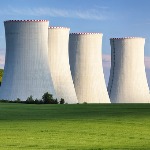
Contemporary nuclear science is much safer than in decades past. It’s responsible for major advancements in cancer treatment, carbon-free energy, space travel, and even our understanding of the origins of the universe. Used wisely, nuclear science could help humanity solve some of the 21st century’s greatest challenges.

In a society that runs on data and rewards that data’s accuracy, timeliness, and security, blockchain technology has a lot of promise. But its applicability isn’t universal, and the tech still faces significant hurdles to widespread adoption.

As the scale and scope of technology and automation increase, and as systems get more complex and interdependent, the study and application of human factors and ergonomics will become increasingly important.

To bring awareness, the US Department of Labor Office of Disability Employment Policy (ODEP) sponsors National Disability Employment Awareness Month (NDEAM). Held in October each year, NDEAM is a month-long celebration and commemoration of the contributions disabled citizens have made to the American workplace and economy.

Pollution prevention is a strategy of reducing or even eliminating pollution at the source, as opposed to removing it after it’s introduced to the existing environment. This strategy can be realized through the elimination of toxic substances from production processes, through the substitution of less harmful substances for harmful ones, or through the more effective utilization of raw materials.

Unlike fungible items, which are interchangeable and can be exchanged like-for-like, non-fungible tokens (NFTs) are verifiably unique. Broadly speaking, NFTs take what amounts to a cryptographic signature, ascribe it to a particular digital asset, and then log it on a blockchain’s distributed ledger.