
Unlocking Data Center Careers: The Best Skills and Certifications
Find schools
sponsored
×
When you click on a sponsoring school or program advertised on our site, or fill out a form to request information from a sponsoring school, we may earn a commission. View our advertising disclosure for more details.
Meet the Expert: Klyne Smith, EngD
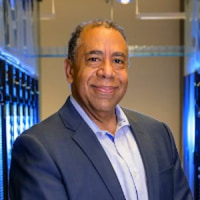
Dr. Klyne Smith is the program director of the data center systems engineering graduate program and a clinical associate professor of computer science at Southern Methodist University’s Lyle School of Engineering. He started his career at IBM writing software, a run that included work on five Olympic Games, before moving into telecommunications, where he learned the hardware and network side of the business.
After 15 more years in that space, Dr. Smith retired from industry and became a professor of computer science and network engineering. He holds a doctorate in software engineering along with degrees in information systems and computer science, and he continues to consult and serve as a board member outside the classroom.
What Jobs Exist in a Data Center?
Dr. Smith breaks data center careers into three tiers. The first requires no four-year degree. “We’re looking at electricians, construction, or HVAC,” he explains. Operations and engineering roles that build or run the facility are also prevalent in data centers when they are first installed, and those typically do not require a four-year degree.
The second tier includes anyone with a college degree, whether that is engineering, business, or finance. Dr. Smith points out that a data center is really two entities in one. “You have the corporate entity, with finance, HR, sales, IT, marketing, and legal like any other company, but then you have the data center, which is its own little community,” he explains.
That community needs electrical engineering, mechanical engineering, sustainability engineering, environmental engineering, and computer science, plus advanced HVAC and technology skills for managing heat capacity, power, and cooling. Roles at this level include design and engineering, critical facilities and reliability engineering, network infrastructure, and capacity planning and optimization.
The third tier is for people with an advanced degree or five to ten years of industry experience, in any field. “Here you have experience, you have professionalism,” Dr. Smith says. “These roles include capacity planning and optimization.” Typical duties include forecasting, modeling, and financial alignment, plus security and compliance, program management, budget tracking, and portfolio governance. At the top of this tier sit facility managers, operations managers, and capacity managers, the people running the critical, moment-to-moment operation of the whole site rather than designing a single piece of it.
Who Thrives in Data Center Careers
Because of the wide array of careers available in a data center, the types of people who thrive in these roles are vast. Dr. Smith looks for people who like variety and don’t rattle under pressure. “You’re in an environment that can’t go down,” he says.
Most people don’t stay in one role for long. “It’s rare after three to five years that you’re still doing the same things you started with, because the data center is so expansive on what you can do,” Dr. Smith explains.
He points to one former student who started as a network engineer configuring connections and now leads one of the largest facility build-outs at his company. “They keep building them, so they need more people who understand a data center to take the next role,” he continues. “But it has to be someone who doesn’t mind doing multiple things, can handle the pressure that goes with a data center not failing, and someone who wants to solve problems.”
Certifications for Data Center Careers
Certifications matter throughout every tier, from the trades up through engineering leadership. “The HVAC certification, the electrical engineering electrician certification, the Cisco network certifications, the cloud architect. A lot of those certifications will help you get the initial job,” he says. He also notes there is currently no single certification that teaches how a data center’s systems interoperate as a whole, which is the specific gap SMU’s degree program is built to close. Below is a closer look at what candidates can actually pursue today, organized from entry-level credentials to advanced, career-spanning ones.
Useful Entry-Level Certifications
The Occupational Safety and Health Administration’s 10-hour and 30-hour construction and general industry cards are a baseline expectation for anyone working around electrical systems, cooling equipment, or a construction site inside or around a data center. They are inexpensive, widely available through authorized trainers, and often a prerequisite before a contractor is allowed on site.
CDCP: Certified Data Centre Professional
Offered by EPI and accredited by EXIN, the CDCP is built for people with zero to two years in a data center or facilities environment, making it a natural entry point for someone moving from a trade or an unrelated degree into data center operations.
Candidates sit for a 40-question, multiple-choice exam and need 27 correct answers to pass. It covers the basics of data center design, infrastructure, and operations, giving newcomers the vocabulary Dr. Smith says most interviewees are missing.
Useful Intermediate Certifications
Uptime Institute Accredited Tier Specialist (ATS)
The ATS is a 16-hour, instructor-led program and exam aimed at data center managers and operators who need to understand Uptime Institute’s Tier classification system, the industry standard for measuring data center reliability and redundancy. The program costs 4,985 dollars and carries continuing professional development credit in many countries. It fits squarely into the critical facilities and reliability roles Dr. Smith described in the second career tier.
Cisco Certified Network Associate (CCNA) and Cisco Certified Network Professional (CCNP)
Cisco certifications remain the standard credential for network infrastructure roles inside a data center. CCNA covers foundational networking while CCNP builds on it with more advanced routing, switching, and data center-specific tracks. Both are administered by Cisco and require passing one or more proctored exams.
AWS Certified Solutions Architect, Associate
Representing the cloud architect certifications, this Amazon Web Services credential validates the ability to design and deploy scalable systems on cloud infrastructure. The exam costs 150 dollars and requires no formal prerequisite, though Amazon recommends at least a year of hands-on experience with AWS. It is a common next step for people moving from traditional IT into cloud-dependent data center roles.
Useful Advanced Certifications
BICSI Data Center Design Consultant (DCDC)
BICSI’s DCDC is built for people designing or overseeing the physical build-out of a data center, the kind of role Dr. Smith described in his third career tier. Eligibility runs through one of three paths: holding a current Registered Communications Distribution Designer (RCDD) credential, holding a BICSI Technician or similar certification plus two years of verified data center design, construction, or operations experience, or three years of that same experience without a prior BICSI credential. The certification must be renewed every three years with 36 continuing education credits.
Uptime Institute Accredited Tier Designer (ATD)
The engineering side counterpart to the ATS, the ATD certifies the ability to design facilities against Uptime’s Tier standards rather than operate them. It is aimed at architects and engineers working on new builds or major retrofits, a category Dr. Smith expects to grow as older data centers are upgraded rather than replaced.
Certified Energy Manager (CEM)
Offered by the Association of Energy Engineers, the CEM targets the sustainability and energy-focused roles Dr. Smith says are a small but growing part of every data center’s staff. Candidates complete a training program, typically $2,000 to $5,000 depending on the provider, and a four-hour exam, with application and exam fees of $500. The credential renews every three years and requires 10 continuing education units.
Is Data Center Job Growth Built to Last?
While there is currently a boom in data center jobs, the question is whether it will continue. Dr. Smith expects two things to happen at once. Companies will keep building new facilities, and they will also go back and retrofit data centers built 10, 15, and 20 years ago with better cooling, better power, and better compression.
“These data centers require a specific configuration from an environmental standpoint, so if you have one, it’s easier to retool it sometimes than to build a brand new one,” he says.
Utilities are often the deciding factor in where a company builds next. “I can go build anywhere. I’ve got lots of open places. But what are the utilities? How far is the power? How far is the gas? How far is the water?” Dr. Smith asks. An existing site already has those connections in place, which is part of why retrofitting stays attractive even as new construction booms.
Longer term, Dr. Smith thinks technology will reduce how many massive facilities the industry needs. “I think what’s going to happen is they’re going to retool those, but then technology is going to come to where we don’t need as many of the big ones, because technology, hopefully, will get smaller and have the same capacity without the same power draw,” he says.
Hardware Skills or Software Skills? You Need Both
A common misconception is that data centers need only hands-on hardware experience or only remote software monitoring. Dr. Smith says it takes both, and the split depends on the facility type. In a single-tenant data center, like the Abilene, Texas facility built exclusively for a single AI company, staff monitor servers remotely and try to restart them first. If that fails, someone has to physically pull the hardware and replace it.
Multi-tenant facilities, like those run by Digital Realty, work differently. Each of the potentially 100 tenants in a single building controls and maintains its own servers. “If their server goes down, Digital Realty is not fixing that. You have to send somebody to do it,” he explains.
That means every tenant needs its own support staff who understand how their equipment connects to the building’s power, cooling, and telecom infrastructure, on top of the data center’s own operations team monitoring the facility as a whole.
How to Stand Out Before You Graduate
Dr. Smith’s advice for current students is to apply to data center companies now, even before you fully understand the industry: “Data centers do not get enough applications from students because students don’t understand a data center, and they look at the job and go, I don’t know what they’re doing,” he says.
The fix is to start reading. Dr. Smith recommends subscribing to trade publications and industry conferences such as InterGlobix Magazine and Data Center World, and following data center content on LinkedIn, to build enough vocabulary to connect your own major to the industry.
“Whatever you’re doing in your field, the majority of fields relate to something that could be beneficial in the data center. You just have to understand a data center,” he says. A finance major, for example, can start recognizing which cost centers inside a data center need analysis, then speak to that directly in an interview instead of describing generic financial planning experience.
Dr. Smith is also clear about whom the program at SMU is for: “I would want them to come to the program looking to transition to a data center company,” he explains. It is built for people already working in tech, at a company like IBM, who want to move specifically into the data center side of the business, and it does not require an engineering background to get in. “If you had an undergrad GPA of 2.2 but you’re in industry for 12 years, let’s talk about your industry work. Let’s not worry about your undergrad,” he encourages.

Kimmy Gustafson - Writer
With a keen understanding of the challenges and opportunities in higher education, Kimmy Gustafson regularly contributes insightful articles to OnlineEngineeringPrograms.com, providing readers with a comprehensive view on the evolving landscape of engineering education since 2019. She has interviewed many engineering experts on a range of subjects, including geoengineering.
Kimmy has been a freelance writer for more than a decade, writing hundreds of articles on a wide variety of topics such as startups, nonprofits, healthcare, kiteboarding, the outdoors, and higher education. She is passionate about seeing the world and has traveled to over 27 countries. She holds a bachelor’s degree in journalism from the University of Oregon. When not working, she can be found outdoors, parenting, kiteboarding, or cooking.

Related Programs

Related Features
An Expert’s Guide to Becoming a Field Engineer
Field engineering is a crucial discipline within the broader engineering landscape, focusing primarily on the on-site implementation, troubleshooting, and maintenance of engineering projects. Field engineers are tasked with applying technical knowledge in real-world settings, often collaborating with construction personnel, project managers, and clients to ensure that projects are executed according to specifications and within the allocated timelines. Their role demands high technical proficiency, adaptability, and problem-solving skills, as they must swiftly address any challenges that arise on-site.
Challenges in Data Center Cooling: An Engineer’s Perspective
A modern data center requires enormous amounts of electrical power to drive billions of transistor switches at high speed. But unlike a motor, which translates the energy into mechanical work, or lighting, which converts some energy into visible radiation, a data center’s primary output is information: streams of bits carried as photons through fiber optic cable.
Combating Climate Change with Better Batteries
With 100 percent renewable energy as the ideal future state, startups and established players are racing to find the right mix of cheap, safe, and effective utility-scale energy storage. Learn more about some of the latest advances and new directions for combating climate change by making better batteries.
Guide to the Top Engineering Summer Programs (2024-2025)
Engineering summer programs take place during the seasonal summer vacation, and offer aspiring engineers the chance to gain some hands-on engineering experience. They also come with networking and mentorship opportunities.
Heroes in Engineering: A Spotlight on Energy Sources & Batteries
George Crabtree, senior scientist and distinguished fellow at Argonne National Laboratory, distinguished professor at the University of Illinois at Chicago, and director of the JCESR, sees energy storage research having major applications when it comes to electric vehicles (EVs) and the electric grid.