
Features

Human-centered design, sometimes also called human-computer interaction or engineering psychology, teaches the importance of prioritizing the needs, desires, and behaviors of people when building technology. Professionals in this discipline are usually called user experience (UX) practitioners.

California’s engineers have developed ingenious methods of maximizing water supply across the 163,000 square miles of the nation’s third-largest state, which is home to 39.3 million Americans. Their work and plans for the future hold insights for new, aspiring, and veteran engineers interested in joining the fight against climate change.
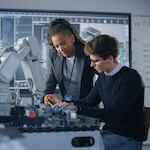
Among all employment sectors, engineering and technology are stereotypically replete with introverts, people who derive more pleasure, satisfaction, and energy from being alone as opposed to being in groups. While that is the stereotype, some engineers are extroverts, receiving much of their energy and enjoyment from being in the company of others. Fortunately for this group of people, many engineering occupations aren’t as introverted as they’ve been assumed to be.

In 2000, nuclear energy from just 30 countries provided approximately 15 percent of worldwide electricity capacity. But by 2019, its share had fallen to 10 percent, with the International Energy Agency (IEA) predicting that without intervention it would fall even further, to 5 percent, by 2040. That represents a significant drop in what could be an important source of clean energy.

Artificial intelligence is no longer a niche tool confined to the labs of tech companies. It is reshaping how engineers work across virtually every discipline. In the architecture, engineering, and construction sector, Arup’s 2025 survey found that 36 percent of engineers, architects, and city planners use AI tools daily.

A modern data center requires enormous amounts of electrical power to drive billions of transistor switches at high speed. But unlike a motor, which translates the energy into mechanical work, or lighting, which converts some energy into visible radiation, a data center’s primary output is information: streams of bits carried as photons through fiber optic cable.

The personal statement for engineering school is not just an essay. It has to be smart, engaging, typo-free, and capable of convincing exhausted admissions reviewers that you are a better fit for their program than the other thousands of applicants they are reviewing.

Not long ago, self-driving cars were science fiction. Today, not so much. Influential companies like Tesla, Uber, Apple, and Google boast dynamic auto-drive programs, and many new startups are following their lead.
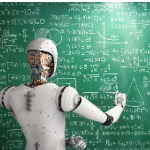
New AI systems designed specifically for robots are turning what were once purely programmed machines into embodied AI: systems that can perceive their surroundings, reason about tasks, and act in the real world.

Data science is an interdisciplinary field that leverages scientific methods, processes, algorithms, and systems to extract insights and knowledge from both structured and unstructured forms of data. It’s commonly associated with big data and artificial intelligence, combining statistics, data analysis, machine learning, and related techniques to understand and analyze actual phenomena with data.